
One kilonewton, in plain terms
A kilonewton is a unit of force. One kN is roughly the force of 225 lb (102 kg) hanging still. So a 25kN rating means the carabiner held about 5,621 lb along its spine in testing before failing; a 12kN clip held about 2,698 lb; a 7kN clip about 1,575 lb.
Those numbers are breaking strengths, not working loads. You never want to get near them, and a falling climber, a swinging hammock or a jerk on a leash creates peak forces far above the static weight involved.
Major axis, minor axis, gate open
- Major axis: loading along the spine, the long way, with the gate closed. This is the big number, 25kN on our climbing D carabiners.
- Minor axis: loading across the carabiner, gate to spine. Our climbing line is rated 7kN here, which is why cross-loading is the thing to avoid.
- Gate open: loading along the spine while the gate is open. It is much lower than the closed rating, which is the whole reason locking carabiners exist.
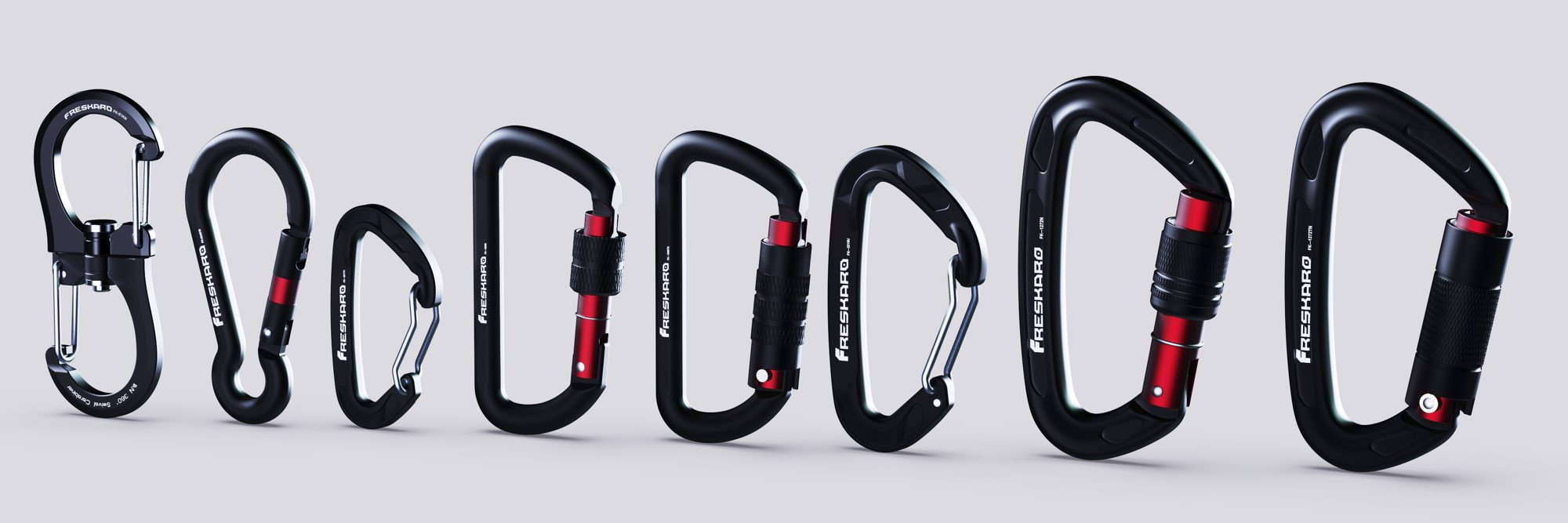
Which of our clips is rated for what
| Clip | Major axis | Certified for climbing |
|---|---|---|
| 25kN auto-lock and keylock D | 25 kN | Yes, UIAA |
| 25kN screwgate D | 25 kN | Yes, UIAA |
| 12kN auto-lock and screw-lock D | 12 kN | No |
| 15kN wiregate | 15 kN | No |
| 8kN nano wiregate | 8 kN | No |
| 7kN pear spring snap | 7 kN | No |
| 1kN 360 swivel | 220 lb static | No |
The rule we follow on our own wall
If a clip holds a person, it comes from the certified 25kN line and it locks. Everything else, from hammocks to keys, can come from the everyday hooks, loaded the long way and checked now and then for wear, grooves or a sticky gate.