
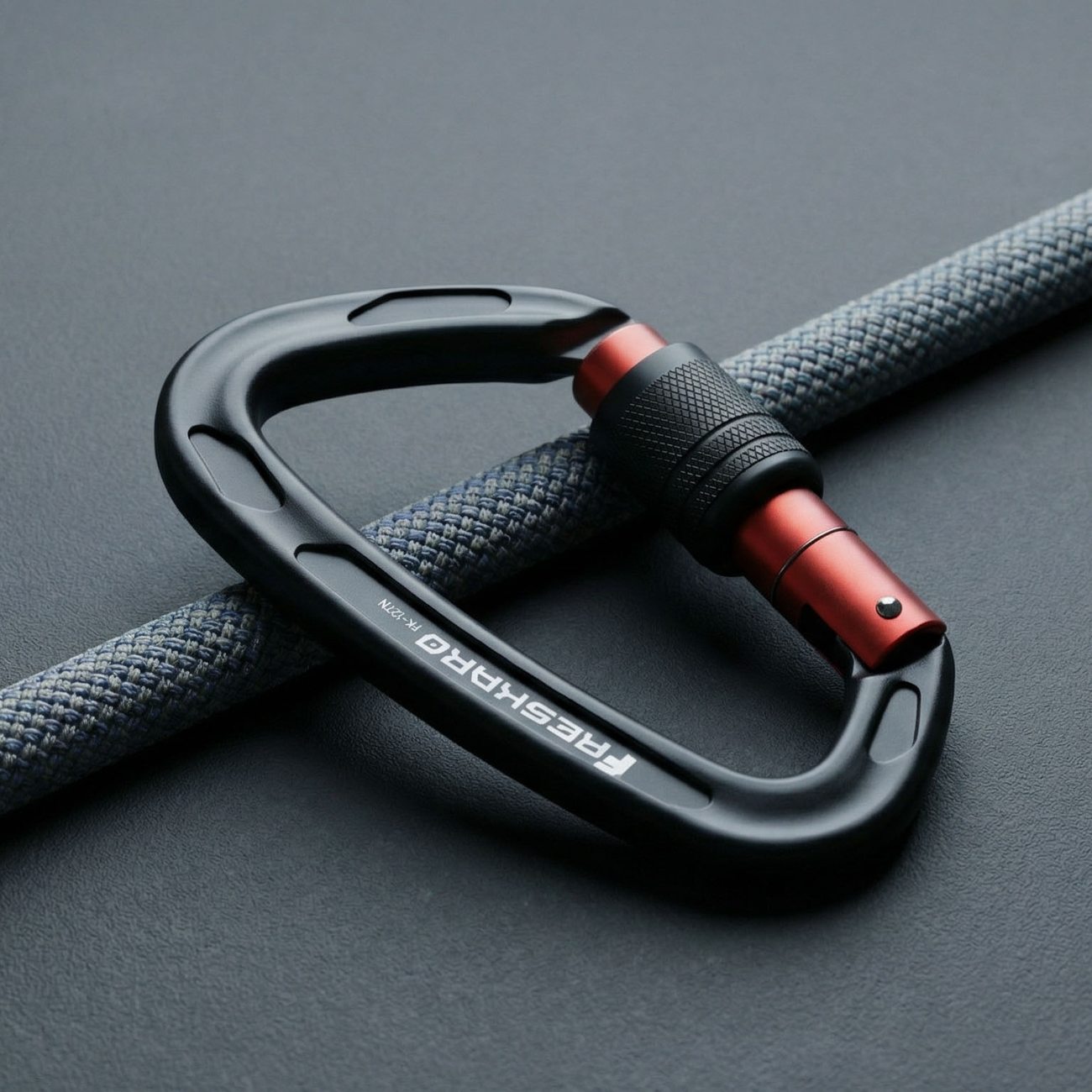
How the auto-lock works
On our twist-lock D carabiners the sleeve is spring loaded. To open it you rotate the barrel a quarter turn and push the gate in. Let go and the gate closes, the sleeve spins back and the clip is locked again. It is fast, one-handed, and it never gets left open.
How the screwgate works
On our screwgates you thread the sleeve down by hand, about three and a half turns from open to locked. Nothing moves unless you move it. That makes it slower, but it also means a sleeve dragged against rock or a tree trunk cannot quietly turn itself open.
Auto-lock
- Relocks every time on its own
- One-handed opening
- Faster at the belay
- Sleeve can be rolled open by rubbing on an edge
Screwgate
- Locks only when you turn it
- Simple, no spring to wear
- Ideal at a fixed anchor
- Easy to forget to lock
How we would rack them
A common set-up is an auto-lock on the belay loop, where you clip and unclip all day, and screwgates at the anchor master point and on the rappel device. Colour helps: a red clip for the belay, a blue one for the master point, a green one for the rappel.
And for everyday gear?
Our 12kN everyday carabiners come in both flavours too. Auto-lock suits keys and leashes that come off several times a day; screw-lock suits hammocks and swings that stay clipped for weeks. Neither is for climbing.